

Your customer pays $47,000 on a $50,000 invoice. Walmart sends three deductions the same week. Amazon flags a compliance chargeback from 90 days ago. And your team is still working through last month's pile.
This is not a bad week. For most AR teams managing retailer accounts, this is Tuesday.
Settling claims and deductions in accounts receivable is one of the most persistent revenue problems suppliers face. It is not a niche issue. It directly affects cash flow, team capacity, and how much money you actually collect versus how much you are owed.
Most teams know the problem well. Fewer have a process that actually keeps up with it.
This guide covers what the deduction settlement process involves, where it tends to break down, and what a more structured approach looks like in practice.
What Are Claims and Deductions in AR?
A deduction happens when a customer pays less than the invoiced amount and attaches a reason for the difference. Your job is to validate that reason and dispute it if it is wrong, before the retailer's deadline closes permanently.
That sounds simple. It rarely is.
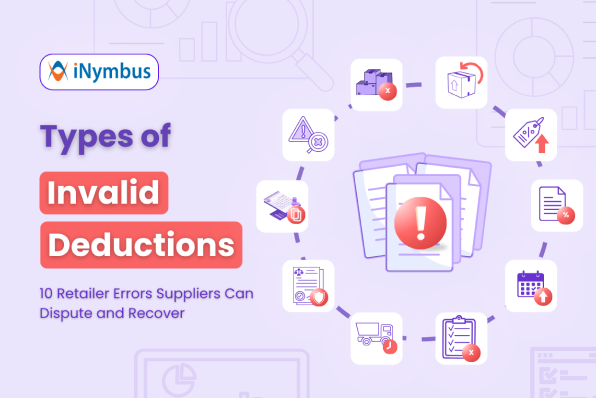
Deductions come in several forms: trade and promotional allowances, pricing discrepancies, shortage and delivery claims, compliance chargebacks from retailers like Walmart and Amazon, and post-audit deductions raised by third-party auditors, sometimes years after the original transaction.
Each type requires different documentation, a different dispute approach, and carries a different recovery rate. Knowing which one you are dealing with before you act is what separates a resolved claim from a written-off one.
The Deduction Settlement Process, Step by Step
Settling an AR deduction is not a single action. It is a workflow with several moving parts and real consequences if any step gets skipped.
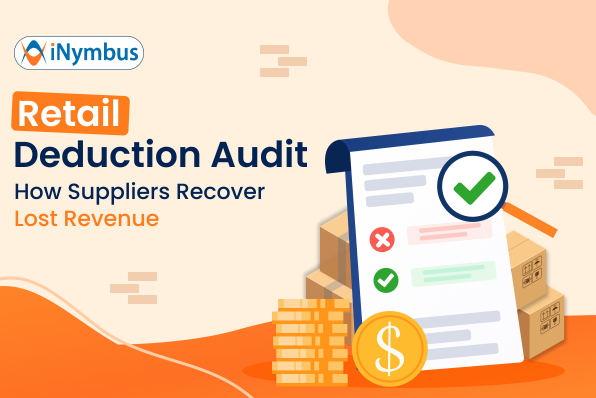
Identify the short payment. During cash application, the mismatch between the invoice and payment gets flagged. This is where the claims process begins.
Gather backup documentation. Pull the original invoice, purchase order, proof of delivery, packing slips, and any promotional agreements tied to the deduction reason.
Categorize and assign reason codes. Tag each deduction by type, trade versus non-trade, and valid versus disputable. This is not just for the organization. It is the data that powers root cause analysis later.
Validate the claim. Did the product arrive correctly? Does the pricing match the contract? Is there a promotional term that applies here? This step determines whether you dispute or approve.
File the dispute or issue the credit. If the deduction is invalid, submit the dispute through the retailer's correct portal with supporting documentation attached. If it is valid, issue a credit memo and close it out.
Settle into your system. Update the open balance, apply credits to the relevant receipt or invoice, and maintain a complete audit trail. Gaps here cause reconciliation problems later.
Look for the pattern. If the same retailer is taking the same type of deduction every month, the dispute process is not the fix. Something upstream needs to change.

Where AR Teams Get Stuck
The steps above make sense on paper. In practice, the process breaks down in predictable places.
Volume is the first wall. Large suppliers can receive deductions from 30 to 100 different retailers, each with its own portal, timeline, and documentation format. When claims volume spikes during peak seasons, teams fall behind fast and stay behind.
Dispute deadlines are unforgiving. Retailers like Walmart limit dispute filings to 60 days from the deduction date. Miss that window and the funds are gone, even if the deduction was completely wrong. Tracking dozens of open deadlines manually is where recovery starts to slip.
Other departments slow everything down. Resolving a shortage claim requires logistics to pull POD records. Disputing a pricing deduction requires sales to confirm what terms were actually agreed upon. Without a centralized workflow, AR teams spend more time chasing information than resolving claims.
Documentation is scattered. Claim data arrives through email, EDI, fax, and multiple online portals. Assembling it all manually for each dispute is slow and prone to error. One missing document can get a valid dispute rejected outright.
Low-dollar claims get written off. When the team is overwhelmed, smaller deductions do not get investigated. They get absorbed. Over time, those write-offs add up to significant revenue leakage that never gets recovered.
These are not signs of a bad AR team. They are what happens when a high-volume, deadline-driven workflow depends entirely on manual effort.
Best Practices for Settling Claims and Deductions in AR
Whether you are tightening an existing process or building one from scratch, these practices make a real difference.
Learn each retailer's rules before deductions arrive. Every major retailer has specific requirements for how disputes should be submitted, what documentation is accepted, and how long you have to respond. Knowing these policies upfront prevents write-offs caused by missed windows or wrong submission formats.
Centralize your claims documentation. Storing all deduction-related files in one accessible place gives your team visibility into open disputes, status, and history. It also cuts the time spent searching for backup documents when a deadline is approaching.
Use reason codes consistently. Tagging every deduction with a standardized reason code in your AR system creates the data you need for trend analysis. Without it, recurring problems stay invisible.
Prioritize by dollar value and deadline. Not every deduction gets the same level of attention. Focus your team on high-value claims and those closest to their dispute window first.
Run root cause analysis regularly. If shortage claims from a specific retailer keep appearing, the answer is not faster filing. It is identifying the upstream cause, whether that is a packaging issue, a carrier pattern, or an EDI mismatch, and fixing it.
Distribute the work across your team. Keeping the entire deductions process with one or two people creates risk. When they leave, the knowledge leaves with them. Spreading responsibility improves oversight and builds team-wide expertise.
Why Automation Changes Everything
Better practices still hit a ceiling when the core workflow is manual. That is where AR automation makes the structural difference.
Automated deduction management software takes over the most time-consuming parts: pulling claim documents from retailer portals, matching deductions to invoices, organizing supporting documentation, and submitting disputes through the right channels. What takes an analyst a full day can run in minutes.
Teams using automation see dispute resolution time drop by 30 to 40 percent at a minimum. For those using full RPA-based solutions, the results go further.
How iNymbus Solves the Deduction Settlement Problem
iNymbus is built for suppliers and distributors handling high volumes of retailer deductions from Walmart, Amazon, Target, Costco, CVS, and more than 50 other major retailers.
Using robotic process automation, iNymbus handles the full claims workflow automatically: pulling documentation from retailer portals and EDI, organizing it per retailer requirements, and submitting dispute packets directly to vendor portals on your behalf. Your team does not need to log into multiple portals or manually compile files for each claim.
Onboarding takes about two weeks. Most clients are processing at full speed before the month is out.
The results are concrete. A video game distributor cleared a two-year Walmart deduction backlog in six weeks, processing claims 30 times faster than before. A brand doing $2 billion in revenue brought average deduction processing time down from three to four weeks to minutes after deploying iNymbus across more than 20 retailer accounts. A book distributor went from a constant backlog to zero open chargebacks within 90 days.
The common thread is not company size. It is that a process built for manual execution finally got the infrastructure it actually needed.
The Bottom Line
Settling claims and deductions in AR is not getting easier. Retailers are building more sophisticated chargeback systems. Deduction volumes are growing. And the revenue impact of unresolved claims keeps compounding.
The teams staying ahead are not the ones throwing more headcount at the problem. They are the ones who have built a structured accounts receivable deduction management process, adopted strong dispute recovery practices, and used automation to handle the volume their team cannot manage manually.
If your process relies on people to hold it together, that is the place to start.
See how iNymbus automates deduction settlement. Schedule a call today.