

Quick answer: Shipper load and count (SLC) is a notation on a bill of lading stating that the shipper, not the carrier, loaded and counted the goods. It means the carrier's driver never verified the contents, so if a shortage turns up at the destination, the carrier can point to the SLC notation to avoid liability, often leaving the shipper to absorb the deduction.
That one phrase can quietly cost suppliers thousands of dollars a year in retailer chargebacks. Here is what it means, why it matters, and how to fight back when the deduction is not actually your fault.
What Does "Shipper Load and Count" Mean on a Bill of Lading?
When a shipper loads a trailer or container without the carrier's driver present to observe and verify the count, the bill of lading gets marked "shipper load and count" (SLC) or sometimes "shipper load, stow and count" (SLAC). The notation tells everyone downstream the carrier, the receiving retailer, and any court that later gets involved, that the carrier accepted the shipper's stated quantity on faith rather than confirming it firsthand.
This is common practice, not a red flag by itself. Reasons a load ends up marked SLC include:
-
The shipper restricts dock access for security or food-safety reasons
-
The carrier drops a trailer and returns for it later, without a driver on-site during loading
-
The driver arrives after loading is already complete
-
High shipment volume makes joint verification impractical for every load
The notation is neutral on its own. The trouble starts when a shortage shows up later and someone has to decide who pays for it.
SLC vs. Related Bill of Lading Notations
Several similar-sounding terms get used interchangeably, but they are not identical. Knowing the difference matters when you are reviewing a claim.
|
Notation |
What It Means |
Who Verifies the Count |
Typical Liability Position |
|
Shipper Load and Count (SLC) |
Shipper loaded and counted the goods without carrier verification |
Shipper only |
Shipper bears the burden of proof for shortages |
|
Shipper Load, Stow and Count (SLAC) |
Same as SLC, plus the shipper also stowed the cargo (common in ocean freight) |
Shipper only |
Shipper bears the burden of proof |
|
Said to Contain (STC) |
Carrier records the shipper's declared contents without opening or inspecting the container |
Shipper only |
Carrier disclaims responsibility for contents |
|
Joint Count |
Both shipper and carrier's driver verify the count together at loading |
Shipper and carrier |
Liability is shared or clearer for both parties |
If your bill of lading shows anything other than a joint count, assume the burden of proof sits with you until you document otherwise.
Why Retailers Lean on SLC to Justify Shortage Deductions
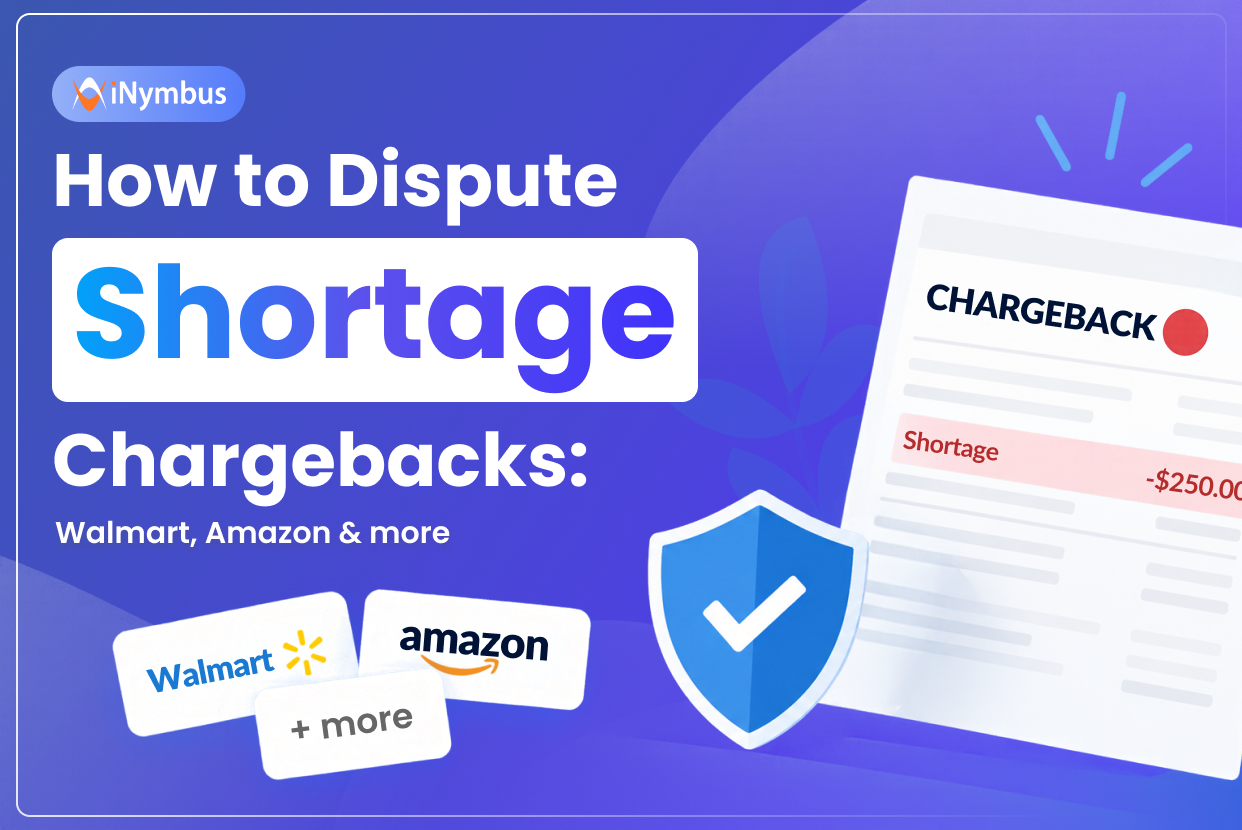
Retailers such as Walmart, Target, and Amazon issue shortage deductions whenever the quantity received at their distribution center does not match the quantity invoiced. When the shipment in question was marked SLC, the retailer or carrier has a ready-made argument: nobody but the shipper verified what actually went into the trailer, so any discrepancy is presumed to be the shipper's error.
That presumption is not always accurate. Shortages can just as easily come from:
-
Warehouse mishandling or damage after pickup
-
Scanning or receiving errors at the retailer's distribution center
-
Concealed pilferage during transit
-
Partial or split shipments that get miscounted at receiving
The SLC notation does not prove the shipper miscounted. It only removes the carrier's obligation to prove otherwise, which is why documentation on the shipper's side becomes the deciding factor in any dispute.
Best Practices to Reduce SLC Exposure
|
Practice |
Why It Helps |
|
Have the driver present for loading whenever possible |
Converts SLC into a joint count, shifting shared liability |
|
Photograph or video the load as it's built and again once sealed |
Creates independent evidence outside the bill of lading |
|
Use printed security tape and photograph the seal |
Shows the trailer was intact and untampered with at departure |
|
Log timestamps, employee names, and piece counts for every load |
Builds a paper trail that supports future disputes |
|
Post a dock policy requiring carrier verification |
Reinforces accountability and reduces future SLC notations |
|
Retain documentation for the full length of the retailer's dispute window |
Missing the window typically forfeits recovery entirely |
None of these steps eliminate shortage claims. They make sure you have something to fight back with when a claim is wrong.
How iNymbus Helps You Recover SLC-Related Deductions
Gathering the right documentation is only half the battle. Submitting it consistently, on time, across dozens of retailer portals, is where most supplier teams fall behind, and where legitimate revenue quietly gets written off.
iNymbus's cloud robotic process automation gathers the supporting documents and evidence tied to a shortage deduction, matches it against the retailer's claim, and submits the dispute directly into the retailer or carrier portal without manual intervention. Whether the deduction stems from an SLC notation, a concealed shortage, or another shortage type, the process runs the same way every time: fast, consistent, and built to recover revenue you would otherwise lose to the deadline.
If SLC-related deductions are chipping away at your margins, iNymbus offers a free deductions and chargeback audit to show you exactly where the losses are coming from and what can realistically be recovered.
Frequently Asked Questions
Still Chasing Deductions Manually?
Recover lost revenue with iNymbus automation


.webp)