For most suppliers, the Amazon Vendor Scorecard looks like a performance report.
In reality, it’s something far more critical.
It directly impacts how much revenue you actually keep.
Every chargeback, shortage claim, and deduction reflected in your scorecard reduces your margins. And in many cases, those deductions go unchallenged, not because they’re valid, but because teams don’t have the bandwidth to dispute them.
For accounts receivable teams, supply chain managers, and CPG brands, the scorecard is not just about performance. It’s about revenue leakage and recovery opportunity.
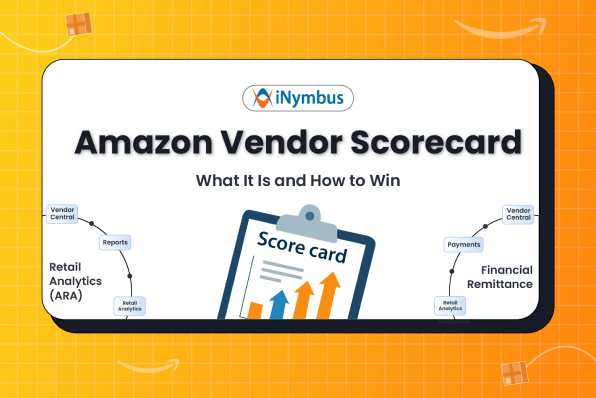
What Is the Amazon Vendor Scorecard?
The Amazon Vendor Scorecard is Amazon’s internal evaluation of your performance as a supplier.
It pulls data from across Vendor Central, including:
-
Operational performance
-
Retail analytics
-
Financial remittance data
While Amazon doesn’t provide a single unified scorecard view, these metrics collectively determine:
-
Purchase order volumes
-
Program eligibility
-
Commercial terms
- Deduction frequency
But here’s what often gets overlooked:
👉 The scorecard is also where your deductions live.
And that’s where the financial impact begins.
Where Your Scorecard Data Comes From (and Why It Matters for AR Teams)
To understand deductions, you need to know where they originate.
1. Operational Performance Dashboard
Navigate to: Vendor Central > Reports > Operational Performance
-
PO acknowledgment
-
Defect rates
- Chargeback summaries
👉 This is where most compliance-related chargebacks start.
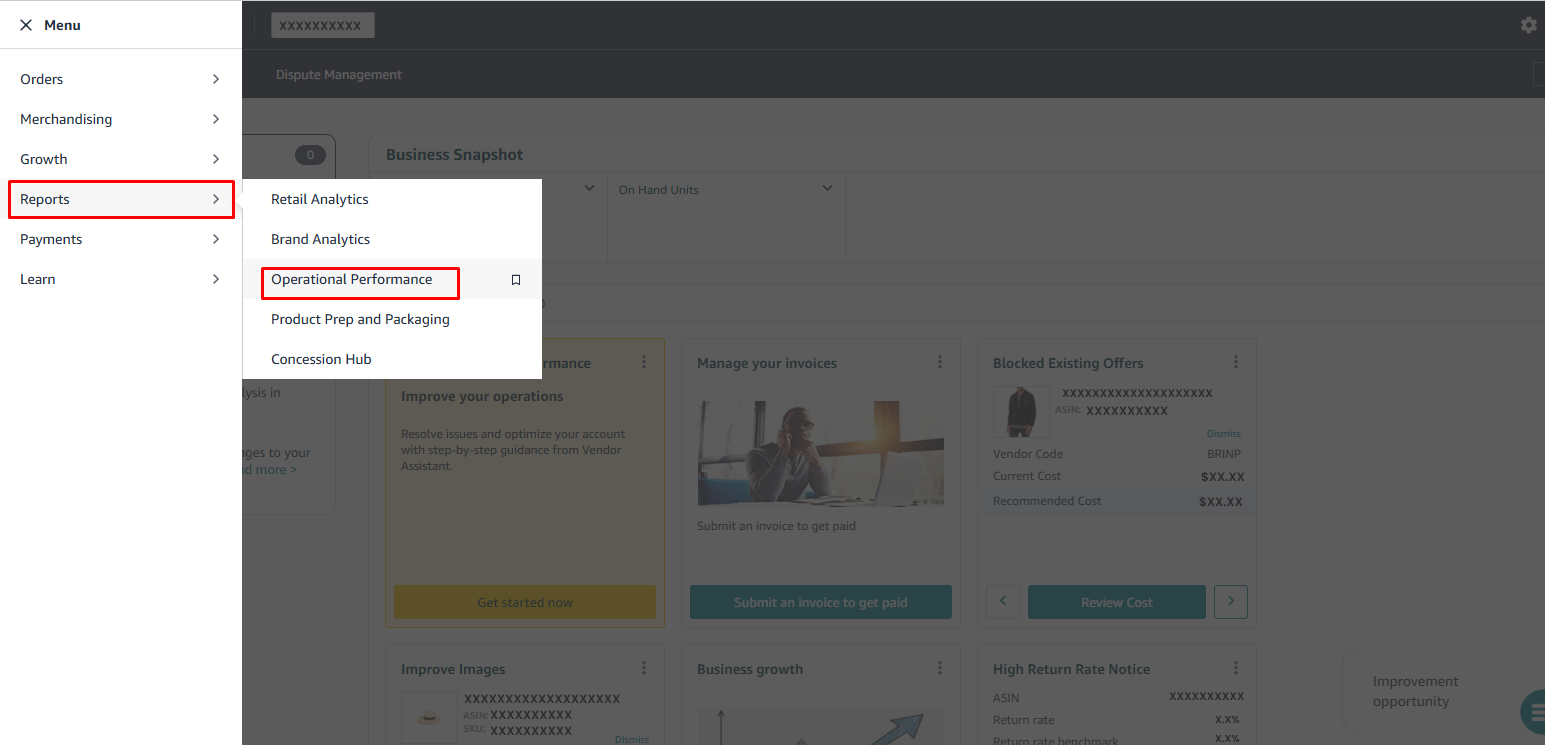
Fig. 1 Vendor Central > Reports > Operational Performance 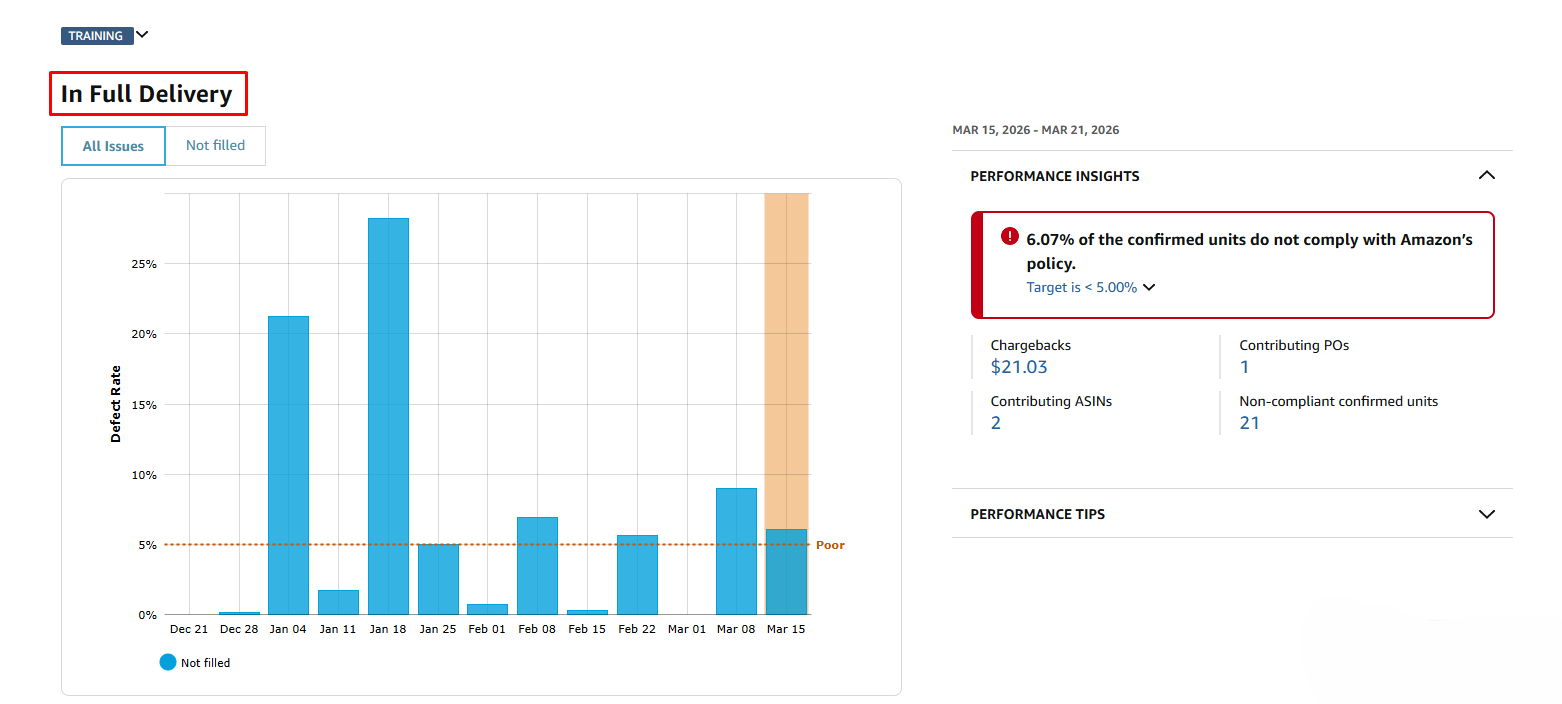
Fig. 2 Operational Performance
2. Retail Analytics (ARA)
Navigate to: Vendor Central > Reports > Retail Analytics
-
Shipped vs ordered revenue
-
Inventory health
- Out-of-stock rates
👉 Gaps here often lead to operational penalties and lost revenue opportunities.
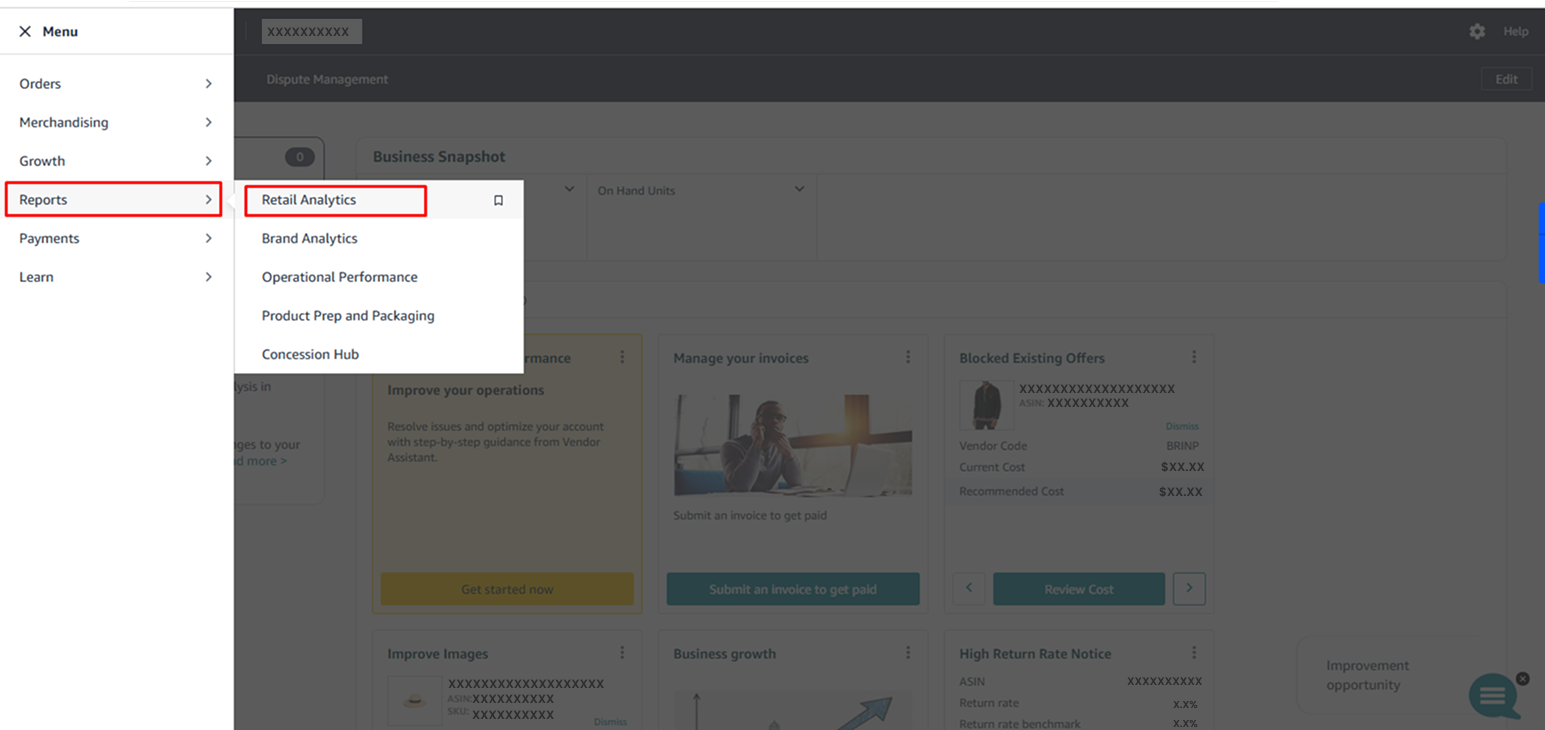
Fig. 3 Vendor Central > Reports > Retail Analytics
3. Financial Remittance
Navigate to: Vendor Central > Payments > Remittance
-
Chargebacks
-
Shortage claims
- Co-op deductions
👉 For AR teams, this is the most critical data source.
This is not just reporting.
This is where revenue is lost or recovered.
Amazon Vendor Scorecard Metrics That Drive Chargebacks and Deductions
Not all metrics are equal. Some directly trigger deductions.
Here are the most important ones:
1. OTIF (On-Time In-Full)
Late or incomplete deliveries are one of the biggest sources of Amazon chargebacks.
👉 Many OTIF-related deductions are disputable with proper documentation.
2. PO Acknowledgement
Late confirmations are one of the most preventable chargebacks.
👉 This is a process issue, not a capability issue.
3. Defect Rate
Includes:
-
Labeling errors
-
Damaged goods
- Incorrect shipments
👉 Often tied to repeatable operational gaps that can be fixed.
4. Chargeback Rate
This is the most direct financial metric.
👉 It reflects how much revenue is being deducted from your invoices.
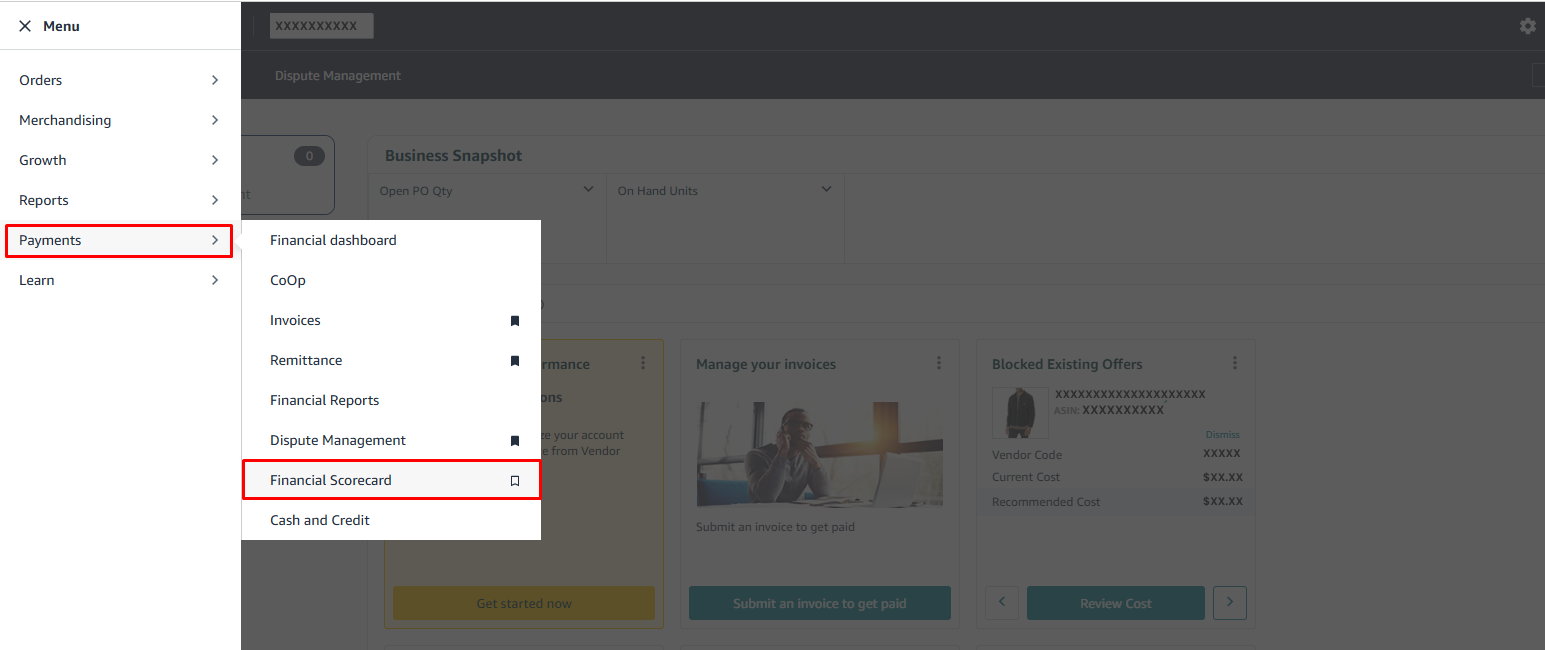 Fig. 4 Vendor Central > Payments > Financial Scorecard
Why Chargebacks Deserve Immediate Attention
Most scorecard metrics are lagging indicators.
Chargebacks are different.
They are:
-
Immediate
-
Financial
- Often recoverable
For many suppliers, Amazon deductions can account for 2% to 6% of total revenue.
Even more important:
👉 Industry data shows 20% to 40% of chargebacks are invalid or disputable.
That means a significant portion of deductions represents recoverable revenue.
The Real Problem: Why Most Teams Don’t Recover Deductions
It’s not about entitlement.
It’s about process.
Manual deduction management requires:
-
Pulling proof of delivery
-
Matching PO and shipment data
-
Uploading documentation in Vendor Central
- Tracking dispute timelines
For high-volume suppliers, this becomes unmanageable.
So what happens?
👉 Teams prioritize large claims
👉 Smaller deductions get written off
👉 Recovery rates stay low
Most suppliers recover only 5% to 15% of their deductions.
Not because they can’t.
Because they can’t scale the process.
How to Actually Recover Amazon Chargebacks
Recovering deductions consistently requires structure.
Here’s what an effective process looks like:
Step 1: Capture & Validate Deductions
Pull deduction data from remittance reports and identify which claims are valid, invalid, or disputable.
Step 2: Gather Proof & Submit Disputes
Collect required documentation like POD, BOL, and shipment records, then submit disputes in Vendor Central within deadlines.
Step 3: Track & Recover Revenue
Monitor claim status, follow up on rejections, and ensure approved deductions are recovered.
The Challenge:
Doing this manually for hundreds or thousands of deductions is not scalable.
Why Automation Changes the Game
This is where most suppliers see the biggest shift.
Instead of:
-
Manually processing claims
-
Missing deadlines
- Writing off deductions
Automation allows teams to:
-
Capture deductions automatically
-
Retrieve required documentation
-
Submit disputes at scale
- Track outcomes in real time
Platforms like iNymbus DeductionXchange are designed specifically for this.
They use robotic process automation to:
-
Connect with Vendor Central
-
Extract deduction data
- File disputes without manual effort
👉 The result:
-
Higher recovery rates
-
Faster resolution
- Lower processing costs
Most importantly:
👉 No more trade-off between volume and recovery
How Your Scorecard Impacts Your Business
Your scorecard doesn’t just reflect performance.
It shapes your business outcomes.
1. Purchase Orders
Low performance = reduced PO volumes
While Vendor Central scorecard data helps suppliers understand operational performance, tools like SmartScout can add a broader marketplace view.
Vendors can use SmartScout to analyze category trends, competitor brands, seller activity, and market share signals alongside their internal Amazon performance data.
This gives teams more context when planning inventory, preparing vendor negotiations, or identifying where lost revenue may also be tied to competitive pressure, not just chargebacks or deductions.
2. Program Eligibility
Poor metrics can impact:
-
Subscribe & Save
-
Promotional programs
- Vendor support access
3. Financial Health
Every deduction:
-
Reduces accounts receivable
-
Impacts Net PPM
- Weakens profitability
4. Negotiation Leverage
High chargeback rates weaken your position in vendor negotiations.
Recovered revenue strengthens it.
How iNymbus Helps You Improve Your Scorecard and Recover Revenue
Managing deductions manually is where most teams fall behind.
iNymbus replaces fragmented processes with a highly automated, end-to-end workflow:
1. Identifies Recurring Deduction Patterns
iNymbus captures deduction data across systems and highlights repeat chargeback drivers like carrier delays, late PO acknowledgments, and compliance errors, helping teams address root causes faster.
2. Standardizes and Automates Your Internal Workflows
From data capture to documentation handling, iNymbus ensures every step follows a consistent process with Robotic Process Automation.
3. Disputes Eligible Deductions at Scale
Instead of cherry-picking high-value claims, iNymbus processes and submits disputes for all invalid deductions, maximizing recovery.
4. Scales Without Adding Headcount
By automating the lifecycle, iNymbus enables teams to handle high volumes of deductions with speed, accuracy, and improved recovery rates.
Final Takeaway
The Amazon Vendor Scorecard is not just a performance tool.
It’s a financial one.
Every deduction reflected in your scorecard represents:
-
Lost revenue
-
Missed recovery opportunity
- Reduced margins
The difference between suppliers who manage deductions manually and those who automate is often hundreds of thousands in recovered revenue.
If your team is dealing with high volumes of Amazon chargebacks, the question isn’t whether recovery is possible.
It’s whether your current process can keep up.