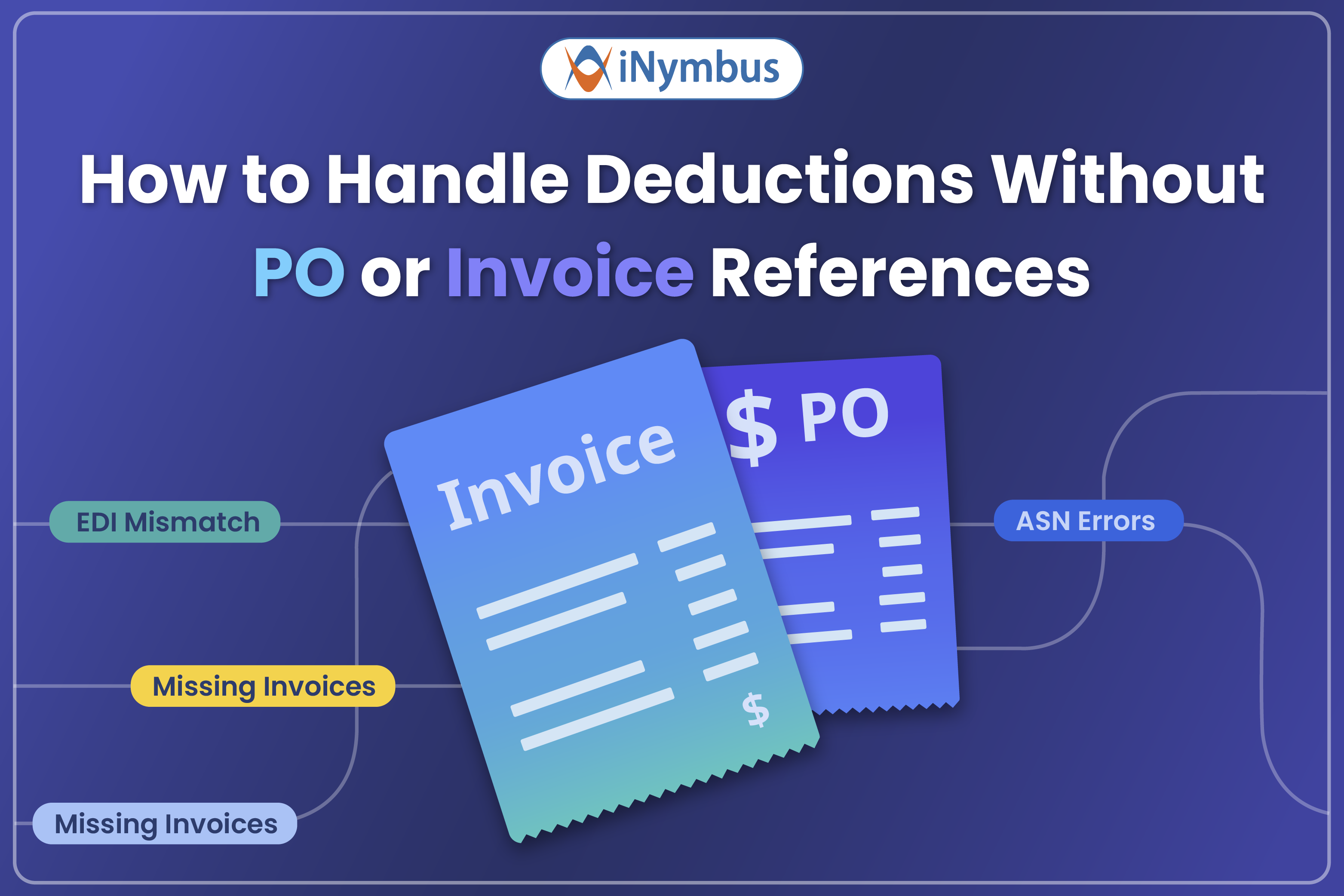
Deductions without a PO or invoice reference are some of the hardest to deal with.
In most cases, these deductions show up with limited detail. No clear document link. No direct match to a transaction. Just a short description and a dollar amount. That makes standard dispute workflows difficult because you cannot rely on the usual matching process.
This situation is more common than it seems, especially when working with retailers like Walmart or Target, where high transaction volumes and automated systems sometimes generate deductions with incomplete references.
The key is not to treat these as unresolvable. They require a different approach.
Why These Deductions Happen
Before disputing, it helps to understand why references are missing.
In many cases, the issue starts earlier in the process.
-
Data mismatches between EDI documents and retailer systems
-
Missing or rejected invoices that have never been fully processed
-
Labeling or ASN errors that broke the link between shipment and PO
-
Post-audit deductions raised without direct invoice mapping
When that happens, the deduction exists, but the reference trail does not.
Step 1: Rebuild the Transaction Trail Manually
When there is no direct reference, you need to recreate it.
Start by pulling all possible related data points:
-
Shipment dates
-
Customer location or distribution center
-
SKU or item numbers
-
Quantities shipped
-
Carrier and tracking details
Instead of searching by PO or invoice, match based on patterns.
Look for shipments that align with the deduction amount, timing, or description. This step takes effort, but it is often the only way to identify the underlying transaction.
Step 2: Use Supporting Documents to Establish Proof
Once you have a likely match, shift focus to documentation.
Even without a PO or invoice reference, retailers will review disputes if you can clearly establish what happened.
Useful documents include:
-
Bill of Lading
-
Proof of Delivery
-
ASN confirmations
-
Packing lists
-
Carrier tracking records
The goal is to build a logical connection between the shipment and the deduction, even if the system did not link them correctly.
Step 3: Address the Root Cause in Your Dispute
This is where many disputes fail.
If the reference is missing, simply saying “no PO found” or “invalid deduction” is not enough. You need to explain why the reference is missing and what actually happened.
For example:
-
If it was an ASN error, state that clearly and show the corrected data
-
If labeling caused the issue, explain how the shipment can still be verified
-
If it is a system mismatch, highlight the supporting documents that prove the transaction
Retailers are more likely to review the case when the explanation connects the gap rather than just pointing it out.
Step 4: Submit Through the Correct Channel
Even without references, routing still matters.
Retailers like Walmart and Target require disputes to be submitted through specific portals or workflows. Submitting through the wrong channel can lead to automatic rejection, regardless of the situation.
If the deduction type is unclear, use the deduction code or description to determine the correct submission path.
Step 5: Expect More Back-and-Forth
These disputes rarely get resolved in one step.
Because the original reference is missing, reviewers may request additional proof or clarification. Delays are common, and follow-up is often required.
Tracking communication and maintaining a clear record of submitted documents becomes important here.
What Affects Success in No-Reference Deductions
Handling deductions without PO or invoice references comes down to how structured your approach is. Small missteps increase the risk of rejection, while disciplined execution improves the chances of approval.
|
Area |
What Hurts Your Chances |
What Improves Success |
|---|---|---|
|
Approach |
Ignoring deductions because they lack references |
Reconstruct the transaction clearly using available data |
|
Investigation |
Skipping the transaction trail |
Build a logical link between shipment and deduction |
|
Explanation |
Providing generic or vague comments |
Clearly explain the gap and what actually happened |
|
Documentation |
Using incomplete or internal-only records |
Provide strong, external supporting documents |
|
Submission Process |
Sending disputes through the wrong channel |
Route disputes through the correct retailer system |
|
Follow-up |
Not tracking or revisiting submitted disputes |
Stay consistent with follow-ups and additional requests |
How iNymbus Helps Handle Unmatched Deductions
Deductions without clear references are difficult to manage at scale because they require manual investigation and cross-checking across multiple data points.
iNymbus helps streamline this process through Robotic Process Automation, pulling data from multiple sources and organizing it in one place. Instead of searching across systems, teams can quickly identify potential matches based on shipment details, deduction patterns, and historical records.
The platform also structures dispute submissions by attaching the right supporting documents and ensuring they are routed through the correct channels. Cases that need follow-up are tracked, reducing the chances of missing deadlines during longer resolution cycles.
For teams handling high volumes, this automation reduces the effort required to rebuild transactions manually and improves the chances of getting these complex disputes approved.