Inventory reconciliation becomes more complex when returns are involved. A small mismatch in a vendor return can trigger reporting errors, accounting gaps, and slow cash flow. Understanding return processes and discrepancies helps teams act quickly and prevent losses.
In this article, we’ll cover:
- Return to vendor meaning
- Return to vendor process
- How to handle return to vendor discrepancies
- How automation can handle all the return to vendor discrepancies effectively
Return to Vendor Meaning (RTV Meaning & What Does RTV Stand For)
Return to vendor refers to sending inventory back to a supplier or manufacturer and recovering value through credit, refund, or adjustment.
In many systems, this is also called RTV, short for “return to vendor.” This term shows up often in inventory and supply chain operations when items are damaged, overstocked, or do not meet quality requirements.
RTV meaning is not just about moving goods; it is about restoring balance between physical stock and financial records.
This definition aligns with how return workflows operate in broader reverse logistic processes used by many teams.
Return to Vendor Process (RTV Process Flow and Vendor Return Overview)
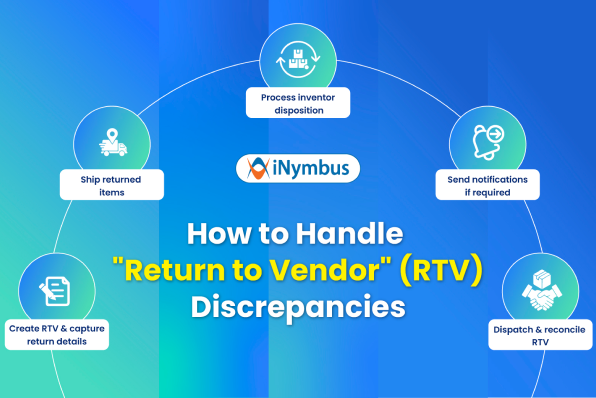
The return to vendor process defines the steps teams take from initiating a return to completing reconciliation. The typical flow includes:
- Initiate the return record in the system
- Ship goods back to the supplier
- Adjust inventory to reflect the outbound stock
- Receive vendor credit or adjustment
- Reconcile inventory and financial records
Vendor return is a general term for any goods sent back to a supplier, while return to vendor (RTV) refers to the formal process with structured tracking and financial impact.
A clear process flow helps reduce manual errors and avoid gaps between inventory and accounting teams. When these steps are not executed correctly, reconciliation fails. Too many returns stay unresolved, and discrepancies start accumulating.
How to Handle Return to Vendor Inventory Discrepancies (RTV Reconciliation & Inventory Discrepancies)
Inventory discrepancies appear when what was sent back does not match what systems or financial records show. These discrepancies can occur for various reasons.
Here are the most common types of inventory discrepancies you may encounter:
-
Quantity mismatches
When the number of items returned differs from what the supplier acknowledges, teams must identify where the difference came from before reconciliation can proceed. -
Missing vendor credits
Inventory may be updated, but the related vendor credit is not posted. This gap leaves open balances and makes reconciliation harder. -
Pricing or cost variance
The value applied to the returned goods might not match the original price or contract terms. This causes incorrect financial adjustments. -
Documentation gaps
Packing slips, return authorizations, or shipment confirmations may be missing or incomplete. Without evidence, vendors can delay or reject credits. -
Timing issues
Returns recorded at the end of one accounting period but credited in another create reconciliation challenges across finance cycles.
Inventory and financial reconciliation must align for accurate reporting. When discrepancies exist, teams need to trace them back to the source and make adjustments systematically rather than correcting them after they surface.
For insights into related supply chain automation and common reconciliation pain points, see our guide on automation in logistics and supply chain management.
How Automation Handles Return to Vendor Discrepancies Effectively (RTV Reconciliation at Scale)
Manual reconciliation often causes more problems than it solves. Teams pull spreadsheets, check emails for proof, and log into multiple portals to compare return status, shipment details, and credits. As volumes grow, these manual steps become bottlenecks.
Automation changes this dynamic.
With a platform like iNymbus, teams can:
- Centralize return data: All return records, shipment details, and vendor responses live in one place. This reduces the need to switch between systems.
- Validate data early: Instead of correcting discrepancies after they occur, automation flags issues at the point of return creation or shipment.
- Link documentation automatically: Packing slips, proof of delivery, and return authorizations stay attached to each transaction. Teams access them instantly during reconciliation.
- Standardize follow-ups: Rules-based automation triggers tasks like escalation or dispute submission, reducing manual tracking.
These capabilities help teams not just speed up reconciliation but also improve accuracy and control. By reducing manual effort, finance and operations can focus on analysis and strategy rather than chasing missing credits or correcting errors.
For more on how automation improves return and deduction processes, check out related posts on the iNymbus blog, such as Vendor Portals: Key Features and Benefits and How to Choose the Best Deduction Management Software.
Final Summary
Return to vendor workflows are more than logistics tasks. They are reconciliation events that directly affect inventory accuracy and financial health. Small mismatches in quantity, credit, or documentation can become significant problems if not resolved early.
Having a clear process flow helps teams capture returns, adjust inventory, and close financial gaps. When reconciliation is manual, teams delay resolution and increase risk. Automation brings clarity, early detection of issues, and consistent documentation, making reconciliation more reliable.
Teams that adopt structured approaches and automation see fewer unresolved returns, better financial alignment, and a smoother invoice-to-cash cycle. As return volumes grow, these benefits compound.
Frequently Asked Questions
Still Chasing Deductions Manually?
Recover lost revenue with iNymbus automation