Retail inefficiency rarely appears as a single breakdown, especially behind the scenes.
It shows up in fragments. Manual data entry. Orders that require review before release. Pricing discrepancies discovered after invoicing. Inventory updates that lag behind physical movement. These fragments accumulate quietly and make retail operations harder to manage as volume grows.
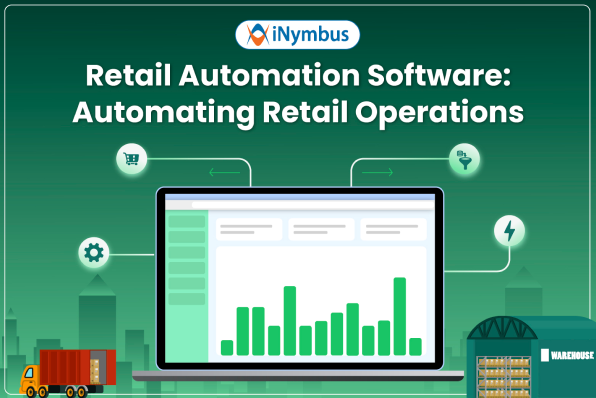
Retail automation software exists to address this problem. It focuses on automating repetitive, rules-based tasks across retail operations and replacing manual effort with consistent, system-driven processes.
What Is Retail Automation Software?
Retail automation software is designed to automate everyday retail processes that follow defined rules and repeat at scale. These processes span multiple functions and systems, making them difficult to manage manually as transaction volumes increase.
Common automation areas include order processing, pricing and promotion validation, inventory updates, invoice matching, payment reconciliation, deductions and chargeback handling, reporting, and exception management.
These challenges are not unusual. They are a natural result of retail scale, fragmented systems, and increasing transaction speed.
Retail automation software continuously compares what happened against what should have happened based on business rules, agreements, and supporting data. Instead of relying on periodic reviews, automation operates continuously.
Why Retail Automation Software Is Becoming Essential
Retail operations have become faster and more interconnected.
Large retailers, carriers, and marketplaces rely heavily on automated systems. Orders, confirmations, deductions, chargebacks, and adjustments are generated automatically and at scale. These systems operate with minimal human intervention and often enforce strict timelines for response.
Suppliers and internal retail teams must operate within this environment. When their processes remain manual, mismatches appear. Backlogs grow. Exceptions are missed or addressed too late.
Retail automation software helps businesses keep pace by ensuring that work continues to move even when volumes increase.
While retail automation is often associated with stores and point-of-sale systems, much of its impact is felt in back-office and operational workflows.
Where Retail Complexity Comes From
Most retail operational issues fall into a few recurring categories.
As product assortments expand, pricing structures become more detailed. Promotions and discounts change frequently and must be applied consistently across channels and customers.
Inventory moves through warehouses, carriers, and retail locations, creating opportunities for delays, shortages, and mismatches that must be reviewed and resolved.
On the financial side, retailers and carriers increasingly issue payment adjustments, deductions, and chargebacks at a detailed line-item level. These must be validated, documented, and addressed within fixed timeframes.
Individually, these issues may appear manageable. In aggregate, they create significant operational complexity for retailers and their trading partners.
Retail automation software brings these scattered issues into a structured framework that teams can manage at scale.
Why Manual Retail Processes Break at Scale
Manual processes tend to work well at low volume.
Early on, teams rely on experience, spreadsheets, and informal checks. Exceptions are manageable. Workarounds fill the gaps between systems.
As volume grows, this approach breaks down. Tasks increase faster than headcount. Dependencies multiply. Delays compound.
Teams begin to prioritize only the largest or most urgent issues. Smaller discrepancies are deferred or ignored. Over time, this leads to operational inefficiency, delays, and financial leakage.
Retail automation software removes the need for selective attention. Every transaction can be validated. Every exception can be identified.
Common Types of Retail Automation Software
Retail automation is a broad category that includes several types of solutions, depending on where automation is applied.
1. Store and Front-End Automation
This includes point-of-sale systems, self-checkout, electronic shelf labels, and in-store inventory tracking. These tools focus primarily on improving the customer experience and store efficiency.
2. Inventory and Supply Chain Automation
Inventory and supply chain automation supports stock accuracy, replenishment logic, warehouse movements, shipment tracking, and fulfillment visibility. These systems help ensure that physical movement aligns with system records.
3. Order and Pricing Automation
Order management and pricing automation apply rules to validate orders, apply correct pricing, manage promotions, and enforce customer or channel-specific terms. This reduces manual review and pricing errors.
4. Finance and Back-Office Automation
Back-office retail automation focuses on invoice matching, payment reconciliation, deductions, chargebacks, claims, credits, and reporting. This area is especially critical for businesses selling into large retail networks.
How Retail Automation Software Works
While implementations vary, most retail automation platforms share common components.
Data is ingested from internal systems such as ERP, accounting, inventory, and warehouse platforms. External data may come from EDI feeds, retailer portals, carrier systems, or remittance files.
Rules engines evaluate transactions against business logic, pricing terms, and operational expectations. Orders are validated. Prices are checked. Payments are reconciled. Discrepancies are flagged.
Workflows create tasks or cases automatically. Supporting documentation is attached. Status and outcomes are tracked in one place rather than across disconnected tools.
Over time, reporting and analytics reveal patterns that help teams improve underlying processes.
Who Uses Retail Automation Software
Retail automation software is used by a wide range of organizations, including:
- Retailers managing store, online, or omnichannel operations, as well as their suppliers and partners
- Brands and manufacturers selling through retail partners
- Distributors handling high order and payment volumes
- Finance, operations, and supply chain teams responsible for reconciliation and exception handling
While the use cases differ, the objective is the same: reduce manual effort while maintaining control as volume grows.
Where iNymbus Fits in the Retail Automation Landscape
Retail automation is a broad category, but some areas remain particularly manual and time-consuming.
Large retailers and carriers generate deductions, chargebacks, shortages, and claims at high volume, often through automated, portal-driven systems with strict timelines.
iNymbus focuses on automating this part of retail operations.
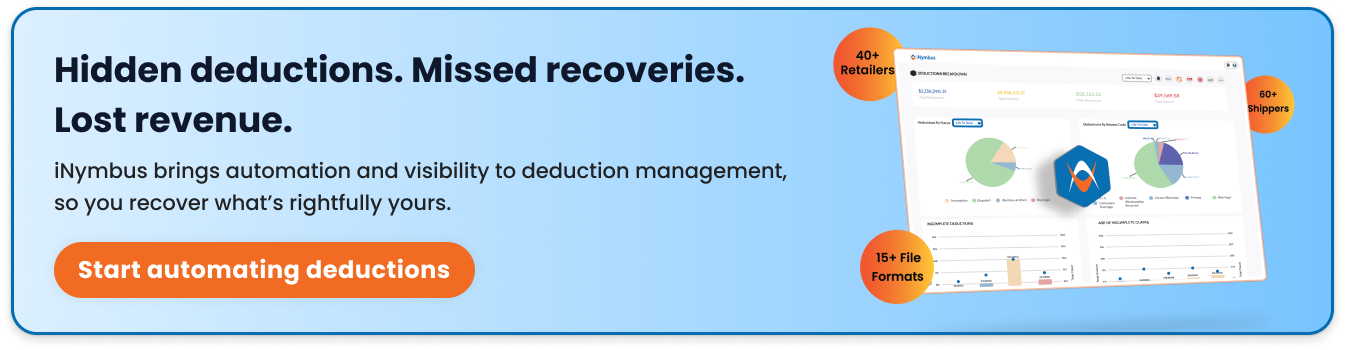
The platform helps suppliers, manufacturers, and distributors manage deductions and claims by pulling remittance data, retrieving supporting documents, submitting disputes through retailer and carrier portals, and tracking outcomes centrally.
Within the retail automation ecosystem, iNymbus addresses the challenge of scaling financial exception management without relying on manual processes.
If retailer deductions, chargebacks, and claims volumes are increasing and exception work is becoming harder to manage, iNymbus is worth exploring.