Walmart operates one of the largest and most complex retail payment environments in the world. Every day, invoices are processed across distribution centers, stores, eCommerce fulfillment networks, and direct store deliveries. At this scale, invoicing is not an administrative task. It is a core control point that links physical product movement to financial settlement.
Invoices move through automated processes that rely on precise alignment between supplier agreements, purchase orders, item data, receiving records, and invoice submissions. When information across these systems does not align, exceptions are created that can result in claims, deductions, or delayed payment.
The Walmart invoicing and payment lifecycle reflects this system-enforced approach. Each stage produces data that becomes an input for the next. Accuracy early in the lifecycle supports automated processing later, while errors propagate forward and surface as payment issues.
Walmart Invoicing and Payment Lifecycle Overview
The invoicing and payment lifecycle begins with supplier setup and agreement configuration and ends when payment is released for merchandise received. Each stage in the lifecycle is interconnected, and failures at any point can disrupt invoice processing and delay payment.
Supplier agreements establish the commercial foundation for invoicing and payment. Those agreements are translated into purchase orders. Purchase orders rely on item file data. Item data supports receiving. Receiving data feeds for invoice matching. Invoice matching determines payment outcomes.
The lifecycle functions as a closed-loop system. Accuracy upstream directly influences payment outcomes downstream.
Walmart Supplier Setup and Agreement Terms
Supplier setup is the first control point in the lifecycle. When a supplier relationship is established, Walmart issues a six-digit supplier number and one or more nine-digit agreement numbers. These identifiers connect supplier data across Walmart systems and govern how transactions are processed.
Supplier agreements define key terms that directly impact invoicing and payment processing, including:
- Payment terms and cash discounts
- Allowances and deductions
- Freight responsibility
- Purchase order handling requirements
A single supplier may operate under multiple agreements, each with different terms. These terms flow directly into purchase order creation and invoice validation. Misaligned or incorrect agreement data carries forward and creates systemic mismatches across all downstream invoices.
Once agreement terms are established, they are executed through purchase orders.
Walmart Item File Setup and Management
Item files sit at the center of Walmart’s supply chain and financial systems. Item numbers, UPCs, pack configurations, costs, and assortments are referenced across purchase orders, receiving systems, and invoice matching.
Item file inaccuracies commonly lead to:
- Cost mismatches between PO and invoice
- Quantity conversion issues
- Pack and case discrepancies
- Assortment or shipper conflicts
Because item data is reused across multiple systems, errors tend to repeat until corrected. When item files are inaccurate, purchase orders inherit those errors, shipments execute against incorrect data, and invoices fail to match. Item file accuracy, therefore, directly influences invoice match rates and claim frequency.
Aligned item data enables accurate purchase order creation.
Walmart Purchase Order Creation and Validation
Purchase orders define Walmart’s expectation for what will be shipped and billed. Each PO establishes item-level detail, including cost, quantity, pack configuration, delivery location, and payment terms.
Purchase orders serve multiple functions simultaneously. They authorize procurement, drive replenishment, guide receiving operations, and act as a primary reference for invoice matching.
When purchase order data does not align with item files or shipment execution, mismatches are embedded into the transaction before the product ships. Purchase orders with incorrect terms or data must be corrected before shipment to prevent downstream invoice and payment issues.
Once purchase orders are executed, physical shipment and receiving occur.
Shipping, Labeling, and Receiving Execution
Physical execution is a critical validation point in the lifecycle. Walmart’s receiving systems depend on compliant packaging, accurate labeling, and complete shipments to confirm receipt.
Receiving discrepancies commonly result from:
- Shortages or overages
- Substitutions or unauthorized items
- Labeling or barcode defects
- Shipments against inaccurate or cancelled POs
Receiving data confirms what physically arrived and becomes a core input into invoice matching. Errors at receipt directly affect payment outcomes by creating mismatches between what was ordered, what was received, and what is invoiced.
After receipt is captured, the financial transaction enters the system through invoice submission.
Walmart EDI Invoice Submission Process
All invoices are submitted through EDI using the EDI 810 transaction, either through AS2 or Web EDI. The invoice represents the supplier’s request for payment based on shipped merchandise.
Invoices are validated against EDI standards and accounting requirements before entering the payment system. Invoices that fail technical validation generate rejection messages and do not proceed further. Invoices that pass validation move into the matching process.
Invoice submissions must include accurate supplier numbers, agreement references, PO numbers, item details, quantities, costs, and payment terms. Any misalignment with upstream data increases the likelihood of exceptions during matching.
Invoice timing determines how invoice data aligns with receiving records.
Invoice Timing and System Coordination
Invoice timing plays a critical role in matching accuracy. Invoices may be submitted after shipment, but timing must align with the receiving activity.
Invoices submitted before receiving complete can generate shortage or proof of delivery claims. Invoices submitted too late may fall outside the defined payment terms and delay settlement.
For distribution center shipments, payment terms generally begin upon receipt. For direct store deliveries, payment terms typically begin on the invoice date. Timing strategies must account for transit time and receiving variability to support clean matching.
Once invoices are received and timed appropriately, matching begins.
Walmart Invoice Matching Systems Explained
Walmart relies on automated matching systems to process invoices efficiently. These systems compare invoice data against purchase orders and receiving records using defined tolerances.
Three-way matching is used when merchandise is received through distribution centers or Sam’s Club facilities. This process compares purchase order data, receiving data, and invoice data.
Two-way matching is used for direct store delivery and certain receipt-based processes. This process compares the receiving data and the invoice data.
Matching may occur at the line level or summary level, depending on program eligibility and data completeness. Invoices that match flow to payment. Invoices with discrepancies generate payment adjustments.
Claims, Deductions, and Chargebacks
When mismatches are identified during invoice processing, payment adjustments may occur.
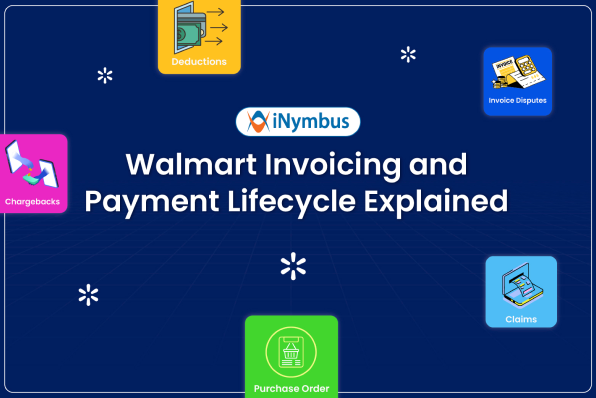
Claims represent adjustments based on differences between purchase order, receiving, and invoice data. Deductions represent adjustments tied to pre-negotiated agreement terms. Chargebacks represent penalties for failure to meet supply chain or compliance standards.
These adjustments reduce the amount paid on an invoice and are recorded against the original transaction.
After payment is issued, post-payment visibility and dispute processes apply.
Walmart Invoice Disputes and Payment Visibility
Payment and claim activity is visible through Walmart’s Accounts Payable Inquiry System. Disputed claims are submitted through the Accounts Payable Disputes Portal with supporting documentation.
Supporting documents may include proof of delivery, bills of lading, receiving reports, and freight documentation. Disputes submitted outside defined timeframes or without valid documentation may be denied.
Ongoing review of payment history, claim trends, and invoice match rates provides insight into systemic issues affecting payment performance.
How iNymbus Supports Walmart Invoicing and Deduction Management
Managing invoicing exceptions and post-payment deductions at Walmart requires consistent execution across multiple systems, strict timelines, and accurate supporting documentation. As invoice volumes increase, manual processes often struggle to keep pace with claim generation, dispute submission, and status tracking.
iNymbus supports Walmart suppliers by automating key activities across the invoicing and deduction management lifecycle using Robotic Process Automation. The platform is designed to operate within Walmart’s existing systems and rules rather than replacing them.
iNymbus automates activities such as:
- Collecting and organizing required documentation, including invoices, purchase orders, receiving reports, and proof of delivery
- Submitting disputes through Walmart’s dispute portals within the required timeframes
- Monitoring dispute status and identifying items that require follow-up or escalation
- Maintaining audit-ready records tied to each claim and invoice
By automating repetitive and time-sensitive tasks, iNymbus reduces manual effort, improves consistency, and helps ensure disputes are handled in alignment with Walmart’s requirements.
For suppliers managing high invoice volumes or complex deduction activity, iNymbus enables scalable, structured execution while supporting revenue recovery and operational control.