TL;DR: CPG stands for Consumer Packaged Goods. The term covers everyday products that consumers use up quickly and repurchase regularly, including food, beverages, personal care, household supplies, and over-the-counter medications. The global CPG market was worth roughly $5.5 trillion in 2024 and is projected to reach $7.8 trillion by 2033. CPG is the dominant category sold through Walmart, Amazon, Target, Kroger, and Costco, and the largest source of trade promotion spend, retail compliance penalties, and supply chain complexity in modern retail.
What Does CPG Stand For? Definition and Meaning
CPG stands for Consumer Packaged Goods. CPG refers to mass-produced, low-cost products that consumers buy frequently, use up quickly, and replace on a regular cycle. These products are sold in standardized packaging through retail stores, supermarkets, pharmacies, convenience stores, and e-commerce platforms.
Three characteristics define a CPG product:
-
Short usage cycle. The product is consumed, used up, or worn out within days, weeks, or a few months
-
High repurchase frequency. Consumers buy the same product repeatedly on a predictable cadence
-
Standardized packaging. The product ships in pre-wrapped, shelf-ready packaging designed for mass retail distribution
A box of cereal, a bottle of shampoo, a six-pack of soda, and a tube of toothpaste are all CPG. A refrigerator, a couch, or a laptop is not. The distinction comes down to replacement cycle and shelf turnover.
How Big Is the CPG Industry?
The global CPG market is one of the largest economic sectors in the world. According to Grand View Research, the market was worth nearly $5.5 trillion in 2024 and is expected to reach $7.8 trillion by 2033. In the United States alone, CPG is approximately a $2 trillion sector and accounts for roughly 10 percent of GDP.
Three forces drive the scale of the category:
Retail shelf dominance: CPG fills the majority of shelf space at Walmart, Kroger, Target, Costco, and every major grocery and drug chain. Retailers depend on CPG turnover to drive foot traffic and predictable revenue. Suppliers in this category compete intensely for shelf placement, promotional slots, and end-cap visibility.
Recession resistance: CPG is widely considered a recession-resistant industry, at least at the lower-priced end of each category. Consumers cut spending on durable goods, travel, and luxury items during downturns, but they keep buying toothpaste, bread, and laundry detergent.
E-commerce expansion: Online CPG sales grew approximately 10 percent in 2024, outpacing brick-and-mortar growth. Amazon now ranks among the largest CPG retailers globally, and direct-to-consumer brands have expanded the category into channels that did not exist a decade ago.
The Main CPG Categories Explained
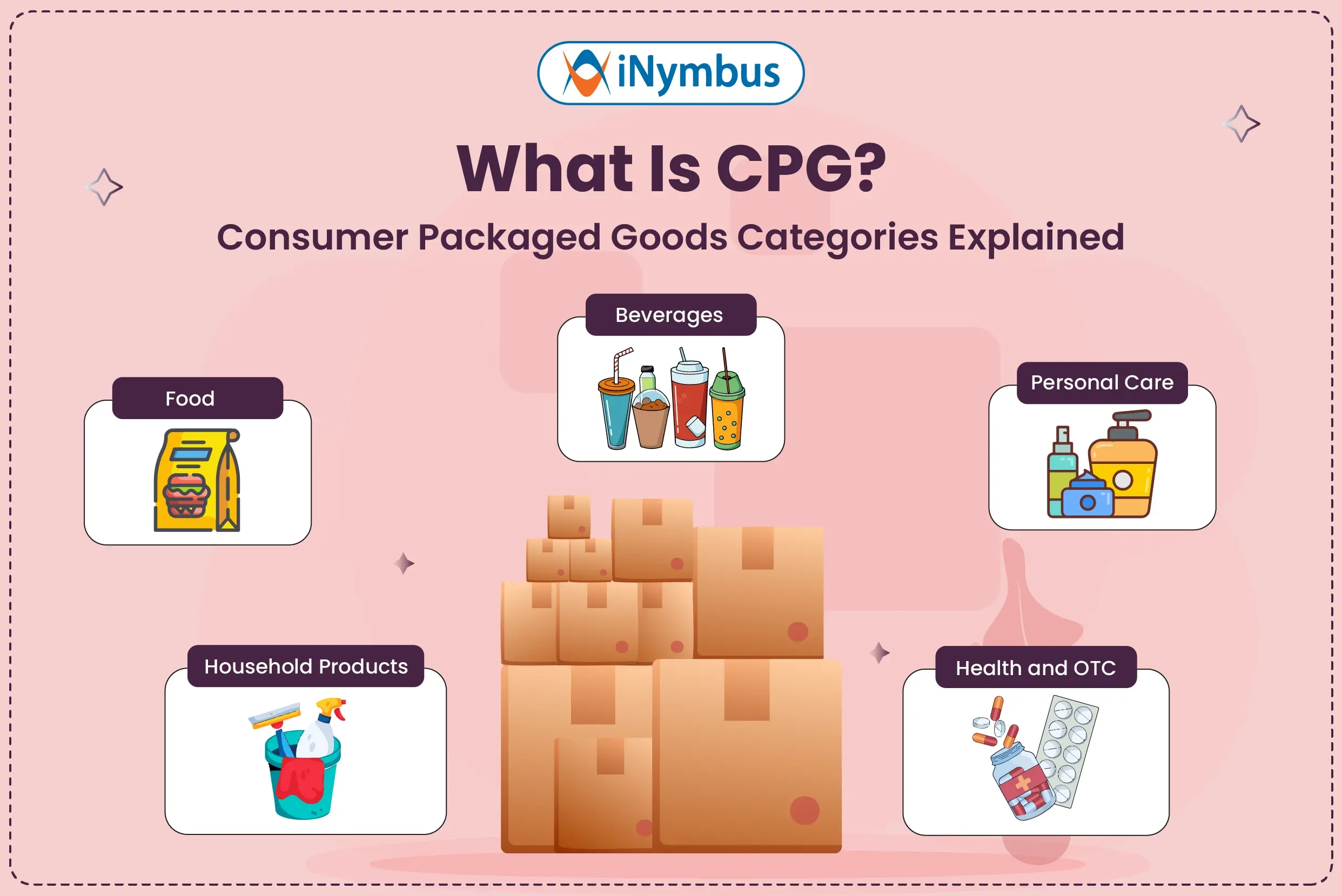
CPG covers an enormous range of products, but most fall into six major categories. Each category has its own operational profile, regulatory environment, and supply chain demands.
|
Category |
Examples |
Key Operational Demand |
|
Food |
Snacks, cereal, frozen meals, packaged produce, canned goods |
Shelf-life management, cold chain for frozen and refrigerated |
|
Beverages |
Bottled water, soft drinks, juice, coffee, energy drinks, beer, wine, spirits |
High-volume distribution, temperature sensitivity for some segments |
|
Personal Care |
Shampoo, toothpaste, deodorant, skincare, cosmetics |
Regulatory compliance, brand differentiation, and frequent SKU launches |
|
Household Products |
Laundry detergent, dish soap, cleaning supplies, paper goods |
Bulk packaging, heavy-weight shipping considerations |
|
Health and OTC |
Pain relievers, vitamins, cold remedies, and first aid |
FDA compliance, lot tracking, and expiration date management |
|
Pet Care |
Pet food, treats, litter, and grooming products |
Cold chain for fresh and refrigerated pet food, FDA oversight |
Some industry breakdowns include a seventh category for tobacco, alcohol, and other regulated CPG products that are subject to additional licensing and excise tax requirements.
Food and Beverage CPG
Food is the largest CPG category by volume and revenue. It spans shelf-stable groceries like pasta and canned soup, refrigerated items such as dairy and prepared meals, and frozen products including ice cream and frozen vegetables. Food CPG operates under strict expiration date tracking, allergen labeling rules, and FDA oversight.
Beverages cover everything consumers drink, from bottled water and soft drinks to coffee, energy drinks, beer, wine, and spirits. The category includes both shelf-stable and refrigerated segments. Alcoholic beverages carry additional licensing and distribution complexity, including three-tier distribution requirements in the United States.
Personal Care and Beauty CPG
Personal care includes toiletries, cosmetics, skincare, and grooming products. The category is shaped by frequent new product launches, strong brand identity, and intense competition for shelf space at retailers like Target, Ulta, CVS, and Walgreens. Indie brands and direct-to-consumer launches have reshaped the category since 2020, with TikTok-driven product virality compressing launch-to-shelf timelines.
Household and Cleaning CPG
Household products cover cleaning supplies, laundry care, dish care, paper goods, and air fresheners. The category is dominated by a small number of large manufacturers, including Procter & Gamble, Unilever, and Reckitt, with private-label competition expanding at major retailers. Heavy packaging and high cube-to-value ratios make freight and warehousing costs a larger share of the operating model in this category than in most other CPG segments.
Health and Over-the-Counter CPG
Health and OTC products include pain relievers, vitamins, supplements, cold and flu remedies, and first aid items. The category sits between traditional CPG and pharmaceutical operations, with FDA regulation, lot tracking, and expiration date management adding operational complexity.
Pet Care CPG
Pet care has grown faster than most other CPG categories over the last decade. The segment includes dry and wet pet food, treats, litter, and grooming products. Premium and refrigerated pet food has driven much of the recent growth, with the category increasingly resembling human food in terms of ingredient standards, packaging design, and brand positioning.
CPG vs FMCG vs Durable Goods: Key Differences
The terms CPG, FMCG, and durable goods describe different product behaviors and are often confused.
CPG vs FMCG: CPG and FMCG refer to essentially the same product class. Fast-Moving Consumer Goods (FMCG) is the term used globally, particularly in Europe, Asia, and Australia. Consumer Packaged Goods (CPG) is the more common term in the United States. Both describe everyday products with short usage cycles and high repurchase frequency.
CPG vs durable goods: Durable goods are products designed to last three or more years, including appliances, electronics, furniture, and vehicles. A consumer buys a refrigerator once every 10 to 15 years and a packaged snack multiple times per week. The replacement cycle is the defining difference.
CPG vs specialty goods: Specialty goods are high-cost, low-frequency purchases tied to specific brand preferences, such as luxury watches, designer handbags, or premium electronics. CPG operates on the opposite end of the spectrum, with low cost per unit and high volume.
How the CPG Supply Chain Works
The CPG supply chain runs from raw materials through retail shelves in a tightly synchronized flow. Each stage adds cost, time, and compliance complexity.
The typical flow involves five stages:
-
Sourcing and procurement. Raw ingredients, packaging materials, and components are sourced from global suppliers, with sustainability and traceability requirements rising every year.
-
Manufacturing and production. Products are produced in batches against forecasted demand, with manufacturers running multiple SKUs through shared lines.
-
Warehousing and distribution. Finished goods move into regional distribution centers, often through a third-party logistics provider.s
-
Retail fulfillment. Products are routed to retailer DCs or directly to stores, with each retailer enforcing its own routing guide, EDI requirements, and delivery windows.
-
Trade settlement. Promotions, allowances, and chargebacks are reconciled against invoices, with deductions often arriving weeks or months after delivery.
Each stage has its own data systems, partners, and failure modes. CPG suppliers who can connect commercial intent (the price, promotion, and quantity agreed) to operational execution (what actually shipped and arrived) tend to outperform suppliers who treat each stage as a separate problem.
The financial side of this flow is often where CPG margins quietly erode. Every promotional cycle generates trade deductions, every compliance miss creates a chargeback, and every spoilage or shortage event triggers a claim. For trade-heavy CPG brands, deductions can reach 30 percent of gross sales when promotional allowances, chargebacks, and post-audit claims are combined. Suppliers running modern deduction management programs (often through automation platforms like iNymbus) recover a meaningful share of those losses instead of writing them off.
Major CPG Companies and Brands
The CPG industry is dominated by a relatively small number of global manufacturers, each operating across multiple categories.
-
Nestlé in food, beverages, pet care, and health
-
Procter & Gamble in personal care, household products, and healthcare
-
Unilever in personal care, food, and household products
-
PepsiCo in beverages and snack foods
-
The Coca-Cola Company in beverages
-
Mondelez International in snacks and confectionery
-
Colgate-Palmolive in personal care and household products
-
Kimberly-Clark in personal care and paper goods
-
General Mills is in the packaged food industry
-
Kraft Heinz in packaged food and condiments
-
Reckitt in health and household products
-
L'Oréal in personal care and beauty
These companies typically operate hundreds of brands across thousands of SKUs, distributed through every major retail channel.
CPG Retail Channels and Distribution
CPG products reach consumers through a mix of physical retail and digital channels, each with its own economics and compliance demands.
Mass retail and supercenters: Walmart, Target, and Costco anchor the mass retail channel and account for a significant share of US CPG sales.
Grocery chains: Kroger, Albertsons, Publix, H-E-B, and regional grocers drive food and beverage CPG volume.
Drug and convenience: CVS, Walgreens, Rite Aid, and 7-Eleven serve high-frequency, low-basket-size CPG purchases.
Club stores: Costco and Sam's Club focus on bulk-pack CPG distribution to higher-volume consumers.
E-commerce: Amazon dominates online CPG, with direct-to-consumer brand sites and retailer e-commerce platforms expanding rapidly. Walmart.com, Target.com, and Instacart have all expanded their CPG share over the last three years.
Convenience and specialty: Trader Joe's, Whole Foods, Sprouts, and natural channel retailers serve a smaller but higher-margin segment of CPG buyers.
Each channel imposes its own routing guide, EDI requirements, packaging standards, and compliance rules. Walmart's OTIF program, Kroger's ORAD program, and Target's OTFR program all penalize CPG suppliers heavily for missed delivery dates or short shipments. CPG suppliers selling into multiple channels manage dozens of overlapping requirement sets at the same time, and chargebacks from compliance failures across those channels are one of the most consistent sources of margin erosion in the industry.
Top CPG Industry Trends in 2026
CPG is going through one of the most disruptive periods in its modern history. Six trends are shaping the category in 2026:
1. Margin compression and SKU rationalization. Procter & Gamble and Nestlé announced significant layoffs in 2025 as part of efficiency programs, and mid-sized brands face parallel pressure through bankruptcies, portfolio cuts, and retailer-driven SKU reductions. "Doing more with less" has shifted from a temporary mantra to a structural operating reality across CPG.
2. AI-driven operations. According to NVIDIA's 2026 State of AI in Retail and CPG survey, 51 percent of respondents identified supply chain operational efficiency as their top AI implementation priority. AI is being applied to demand forecasting, inventory positioning, predictive maintenance, and trade promotion analytics.
3. Omnichannel complexity. Consumers now discover, compare, and buy CPG products across stores, marketplaces, social platforms, and direct channels. Brands must manage pricing, content, inventory, and fulfillment consistency across every touchpoint, which has made supply chain visibility a top board-level priority.
4. Sustainability and regulatory pressure. Demands for eco-friendly packaging, ethical sourcing, and carbon footprint reduction are rising. These pressures create new compliance categories at major retailers, with potential deduction exposure for brands that miss new packaging or labeling requirements.
5. Premiumization and wellness. Categories supporting wellness, functionality, and convenience continue to attract innovation investment. These segments benefit from faster product development, premium pricing tolerance, and stronger brand loyalty than commodity CPG.
6. Tighter retailer compliance. Retailers, including Walmart, Target, and Kroger,r have continued to tighten compliance programs. The 3 percent OTIF penalty at Walmart, ORAD fines at Kroger, and ASN-driven chargebacks at Target compound across thousands of CPG shipments per year. Brands running modern deduction management and chargeback automation recover materially more of these penalties than those still managing them manually.
Conclusion: Where CPG Goes From Here
CPG is not a quiet category. Trillion-dollar scale, thin margins, and constant retailer pressure mean the operational details decide who wins. Brands that connect pricing, promotions, shipping, and trade settlement as one system tend to outperform brands that treat each as a separate function.
The category is also moving faster than it used to. AI is changing forecasting and trade analytics. Omnichannel commerce is multiplying the data brands have to manage. OTIF, ORAD, and OTFR programs keep tightening. And leaner teams are now expected to handle more complexity than ever.
The brands that come out ahead will be the ones treating execution as a strategic lever, not back-office work.